Posted
on January 5, 2006, 19:48,
by mjw.
GNU Classpath and friends meeting during Fosdem 2006
The official GNU Classpath and friends meeting program is available. Looks like it will be a great event. February 25 and 26 in Brussles, Belgium. And as always there are also a lot of other cool talks to attend during Fosdem 2006.
Comments Off on 05 Jan 2006
Posted
on January 1, 2006, 20:01,
by mjw.
eclipse-cdt entered Debian unstable. Making the ClasspathHackingWithEclipse setup work nicely out of the box on Debian. yeah! (wiki updated)
JNode 0.2.2 was released today. The JNode developers are often quiet (not many posts on the mailinglist, no blogs) but they seem to work very hard.

Comments Off on eclipse-cdt enters debian unstable – JNode 0.2.2
Posted
on January 1, 2006, 09:02,
by mjw.
2006! Moving
The ADSL, telephone and cable companies are not playing nice which means I have had no internet access in my new house last week and probably won’t have any next week. It took a couple of days to get used to. And I cannot say that I particularly like it. But I must say that not having instant access to email, news, websites and updates is also very relaxing. It feels like I am on vacation :)
I have finally moved Planet Classpath from my personal box to our new shared developer.classpath.org machine. As soon as DNS updates the planet should automagically be available from its new location. Apologies if there is any interruption in your daily reading habits.
Happy new year!
Comments Off on 01 Jan 2006
Posted
on December 21, 2005, 09:02,
by mjw.
Raif Naffah created a nice Hacking GNU Classpath with Eclipse document (including lots of screenshots) explaining how to setup native Eclipse on Fedora Core 4 to directly hack on GNU Classpath and Mauve. Tom Tromey made it so that you can use Cacao as runtime for all your work from inside Eclipse. And Stephan Michels helped me replicate the whole setup out of the box on Debian (unstable).
The result is nice. Following the instructions automatically creates a whole GNU Classpath hacking and testing environment using Eclipse on a fully free stack out of the box on modern distributions. The fact that we are building and testing our own stuff using applications build on top of it is pretty powerful. And the instant write/compile/test cycle (the compile step just disappears) should make people more productive when writing, testing and fixing Mauve tests.
It is a wiki page, so please share any hints and tips if you try it out.
Comments Off on Dogfood – Hacking GNU Classpath with Eclipse
Posted
on December 19, 2005, 10:09,
by mjw.
We are pleased to announce gjdoc release 0.7.7. gjdoc is the GNU documentation generation framework for java source files. gjdoc is part of GNU Classpath Tools. This is mostly a bug-fix release. This makes gjdoc much more robust when dealing with invalid documentation tags or source code and it is now possible to generate the whole javadocs for eclipse using gjdoc out of the box.
New in release 0.7.7
- gjdoc/24457: NPE for @see tag
- gjdoc/24474: StackOverflowError in reflexive expressions
- gjdoc/24501: gjdoc doesn’t compile
- gjdoc/24508: Files weren’t generated for packages with names like *.java
- gjdoc/24509: gjdoc is not able to use the javadocs from java.sun.com
- gjdoc/24510: gjdoc have problems the -linkoffline
- gjdoc/24507: The overview-summary.html are not generated
- gjdoc/24553: Problem with @link tags in parameter descriptions
- gjdoc/24722: Problems with single line comments between method arguments
Thanks to Stephan Michels, David Gilbert, Julian Scheid and Michael Koch for reporting bugs, suggesting and testing fixes and preparing the
release. The latest release of GNU gjdoc can always be found at ftp.gnu.org/gnu/classpath. This new version of gjdoc has been used to generate class documentation for the GNU Classpath CVS source files.
Comments Off on gjdoc 0.7.7 released
Posted
on December 19, 2005, 09:38,
by mjw.
The “official autobuilder and regression tester” builder.classpath.org is finally fully operational.
The builder.classpath.org Xen infrastructure has been donated by Berkeley Signal Inc through Jim Pick who also helps with setup and maintenance of the system. We are currently using Tom Tromey’s build scripts for updating, compiling and running the following things:
- gcc-trunk build + libgcj regression test.
- gcjx build
- classpath CVS make distcheck
- classpath CVS builds with gcj 4.0.x, gcj-trunk, jikes and gcjx
(Anthony is working on bootstrapping ecj so it can be added to the mix)
- jamvm build
- mauve batchrun run for jamvm/classpath/gcjx
- jacks run for gcjx
Regressions are posted to classpath-regressions. And on irc.gnu.org in #classpath there is a little cpbot that can give you the current status (just type =help). No fancy webpage results yet (the Cacao developers do have a nice mauve testresults comparison page). Hopefully much more will be added in the future. It has already been helpful catching some things really quickly which would otherwise only show up while creating and testing an new release.
Comments Off on builder.classpath.org
Posted
on December 16, 2005, 19:11,
by mjw.
Ruby, C, GCJ, SWIG, Lucene…
Ruby Central 2005 Codefest Grant recipients, number 4 is interesting:
4. Ruby Bindings to Lucene Search Engine (Brian McCallister)
Provide Ruby bindings to the Lucene (http://jakarta.apache.org/lucene/)
search engine via SWIG and GCJ.
I couldn’t find how this was going. Or how it compares to the PyLucene implementation. But I found out that Luncen4C also has a GCJ backend for plain C programs. Seems gcj is becomming the glue between a lot of interesting languages.
Comments Off on 16 Dec 2005
Posted
on December 12, 2005, 00:50,
by mjw.
With GNU Classpath 0.19 we also for the first time released a snapshot of the generics branch for people to play with. I have to admit that I have been concentrating mostly on the trunk and hadn’t been paying much attention to the generics branch. Much thanks to Tom Tromey for genericizing (is that a word?) a lot of packages and to Andrew Hughes for merging from trunk and maintaining the generics branch in a state so that we can do regular releases of it. It is amazing how much already just works. I hacked together a native-eclipse that uses the glibj generics zip from GNU Classpath and jamvm as launcher for the eclipse java projects. And it all just worked out of the box! :)
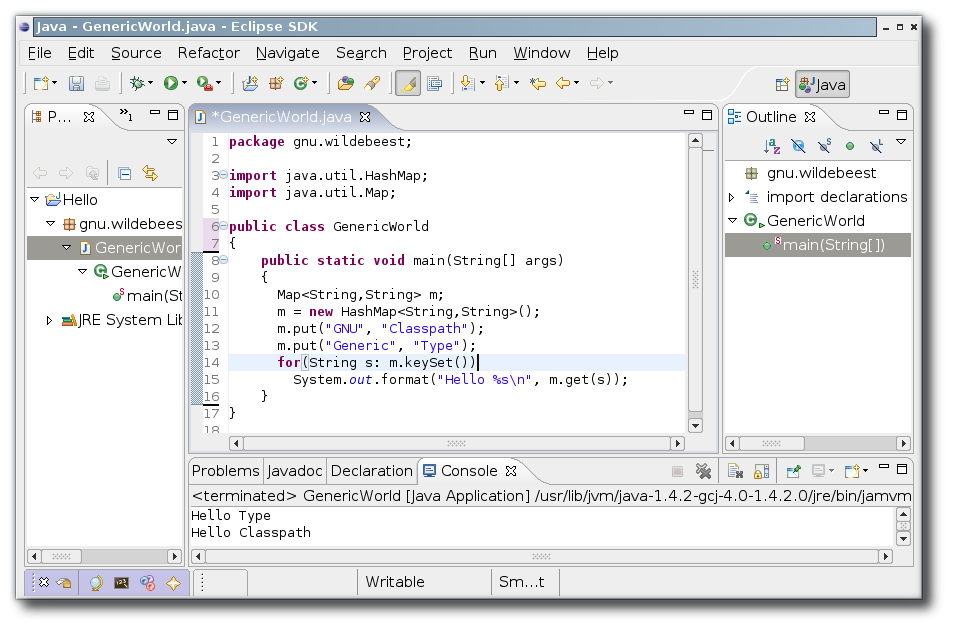
If you are lucky and have a PPC box running Debian unstable then Stephan Michels (tashiro) has some nice packages to play more with GNU Classpath generics (ecj-generics, jamvm-generics and even retroweaver to make it all work on your non-generics enabled runtime).
Comments Off on GNU Classpath generics, native eclipse and jamvm
Posted
on December 7, 2005, 00:51,
by mjw.
David Gilbert does it again.
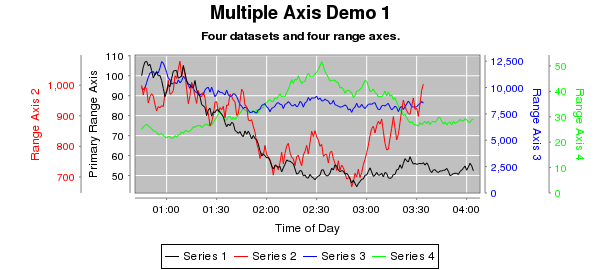
Has JFreeChart Escaped the Java Trap? Yes!!!
Comments Off on Free JFreeChart – cairo and java-gnome
Posted
on December 6, 2005, 21:01,
by mjw.
Join FSF as an Associate Member!
Click that link! I need only 2 more referrals to receive this great gift!
BTW. The FSF started the GPLv3 update process.
Comments Off on Almost Christmas time…